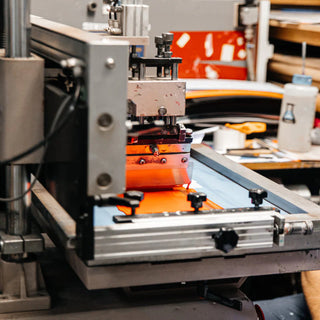
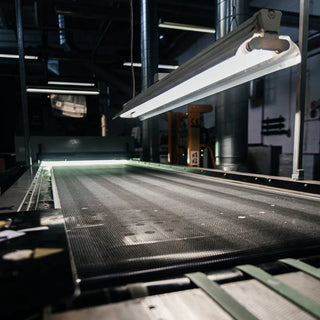
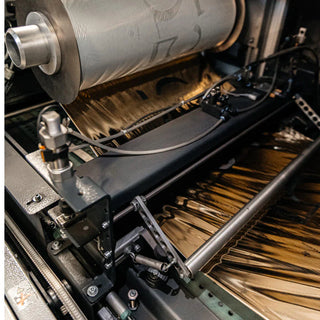
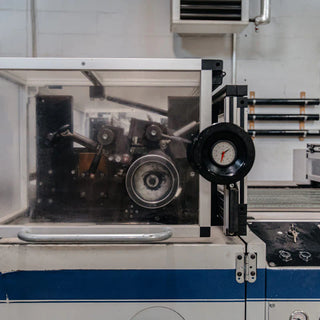
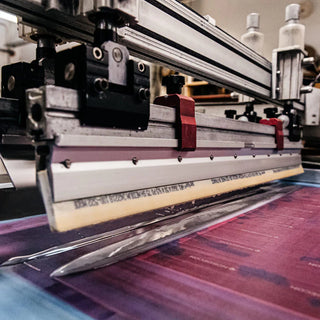
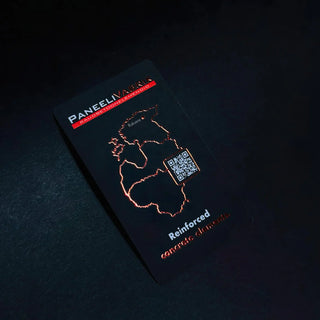
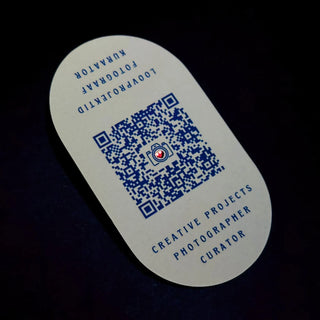
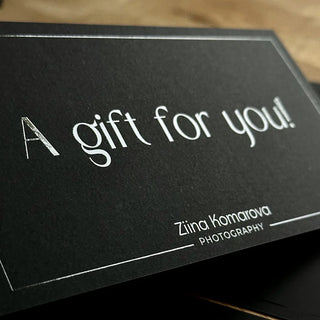
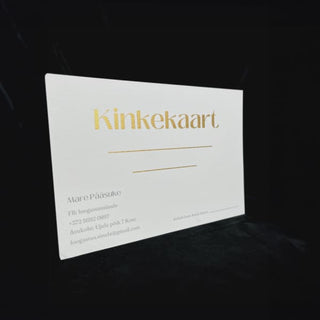
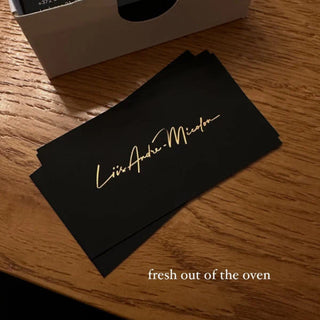
UV spot varnish is a partial (shape-based) coating applied to the print either with screen printing or digital technology. It dries instantly under UV light (in a UV dryer). Because it is solvent‑free and cures so quickly, production is very fast – with some machines reaching up to 1,800 sheets per hour, meaning for example, 1,800 book covers per hour.
Spot UV can be applied directly onto offset-printed products, coating only the desired areas (such as a book or magazine title), or it can be printed on dark substrates. On dark backgrounds the spot UV area becomes more noticeable, because the lens and wet-surface effect makes the colour of the underlying area appear about one shade darker under the varnish.

On a white background, the effect of spot UV is harder to notice – it often becomes visible only when you tilt the print in the light. For this reason, we recommend using it mainly on coloured or dark backgrounds.
Spot UV is usually used to highlight certain parts of a design, such as titles, photos, logos, and so on.
Standard spot UV has been widely available and in use for almost 35 years.
As in many print shops that specialise in special effects, we also offer around 10 different types of spot UV. In addition, many of them can be enhanced with pearlescent powder or glitter in a wide range of sizes and colours.
The most common UV spot varnishes applied using the screen-printing method are:
- Standard glossy spot UV (up to 20 microns), applied to coated papers or laminate.
- Raised spot UV (up to 35 microns), applied to coated papers or laminate.
- Matte spot UV, which is used on previously glossy surfaces to make specific areas matte, applied to coated papers or laminate.
- Glossy spot UV for uncoated papers, developed especially for use on uncoated stocks.
- Raised spot UV for uncoated papers, developed especially for use on uncoated stocks.
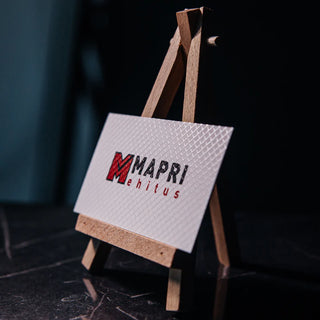
- Bubble-pattern spot UV, applied to coated papers or laminate.
- Sand-texture spot UV, applied to coated papers or laminate.
- Luminescent, glow-in-the-dark spot UV, which needs to “charge” for about an hour in normal light and then glows for around 8 hours, applied to coated papers or laminate.
- Fluorescent spot UV, which glows safely under a money-check / UV lamp, applied to coated papers or laminate.
Digitally printed pieces must be covered with a laminate layer before applying these varnishes, because UV varnish in the UV dryer would otherwise usually reactivate the digital print. Due to the high variability of digital inks, it is also not possible to use all of the above screen-printing-based UV varnishes on digitally printed work (spot UV can still be used, but the design doesn’t have to be one single element – for example, the entire surface can be covered with a spot UV pattern).

- Spot UV digital printing (3D)
To handle the variability of digital prints, there are special digital spot UV machines (not all of them – for example, MGI). MGI machines have a built‑in scanner that automatically positions the desired spot UV on every sheet, even if there is some movement in the print run.
Most of these digital devices can produce not only standard, but also raised spot UV varnish, including many types of 3D varnish. A particularly unique solution is a robot‑driven system that can apply up to five varnish layers of different heights in a single pass, based on a designer’s print file. In addition, some machines, such as those from MGI, are equipped with a digital foil unit, which – if necessary and depending on the image – can apply foil over previously printed UV varnish in exactly the desired areas. With this technology, the UV varnish acts as an adhesive for the foil, and the resulting digital foil is always at least about 30 microns thick.
Another advantage is that the reverse side of the print remains smooth, unlike with classic hot foil stamping where the metal die and pressure often leave a visible impression on the back – something many clients do not want.