


Luxury Business Cards | Print & Design

4–7 Day Production Time

Money-Back Guarantee

46+ Different Print Effects

30+ Years of Experience
More About Business Cards
Let's get down to business. You're probably thinking... "okay cool, but what's the price?"
For 100 pieces, prices start around €48. There's no upper limit — one client ordered 300 pieces for €1,400, and came back for more three times last year. It all comes down to how exclusive you want to go.
Sure, we've got a serious machine park — but just because we can pile all the bells and whistles doesn't mean we should. One design can be brought to life in a hundred, maybe a thousand different ways in our factory. Each one has its own price. We just like doing it tastefully — and based on what you and your company actually need. If you're selling luxury, everything around your business needs to feel luxurious. If you're competing on price and handing out cards in huge quantities, an exclusive card doesn't make sense there — and that's fine too.
If you already have a design, we'll always show you a few options for how to make it stand out.
99% of our clients realize that how "exclusive" a business card feels comes down to 4 things:
- Design
- Material weight/thickness
- Surface material (soft-touch, sandy, craft, etc.)
- Print technique or special effect (UV gloss, foil stamping, embossing, debossing, flat gold, silver, etc.)
So here's how it works with us: we start by picking the print technique that best supports your design and brand, then recommend materials to match. You'll also get a few different weight/thickness options in the quote.
Bottom line: in our shop, the price is yours to choose.
Got a print file ready? That's all we need for an exact quote. If not, just let us know — our designers will help you create one.
Thank you for reading. TIP:
Many successful companies order business cards in different quality levels. Think of it as two tiers: for time-wasters, give out the cheap stuff. For real business, hand them a business card.
So what are you waiting for? Ask for a quote — the price is yours to choose.
Keys to a Successful Business Card

Design
Your logo, colors, and typography need to match your company's identity (CVI) — not fight it. Don't have a design yet? We'll walk you through it.

Content
Say less, mean more. Pick words, icons, patterns that carry your core message without burying it. Let your best customers see the design before printing it. If they don't like it, it's not ready yet.

Material Selection
Choose materials and print quality that actually hold up and represent your company properly at the end of the day. A business card that looks tattered by the end of the day isn't doing its job.

Adding Value
A useful tool, a small bonus, a nice surprise — give people a reason to keep your card instead of losing it in a drawer.

Printing
This is where it gets fun. Rich special effects add depth and texture, a soft-touch finish adds that luxurious feel under the fingertips. Small details, big difference.

Clarity
Your contact info should be easy to read. Etiquette 101: if the recipient needs a magnifying glass, the card has already failed.
Printing Techniques and Special Effects
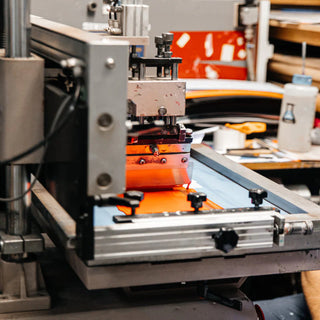
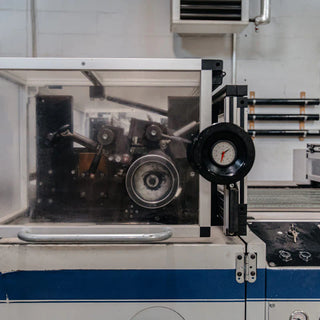
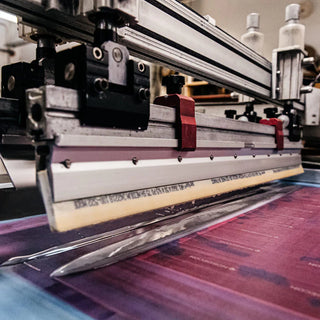
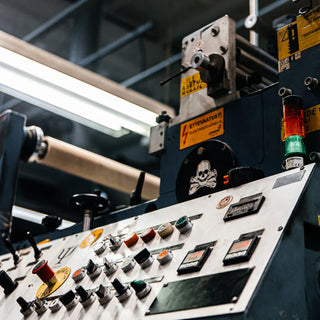
Silk screen, digital, offset — each one serves a specific need. We're most known for our screen-printed work. Screen print delivers the brightest, truest PANTONE colors, and it's one of the very few ways to print directly on dark materials.
Interesting fact: did you know regular printers don't actually print white? In 99% of cases, "white" is just the paper showing through. So if your card is black but the edges are white — that's why. You'd need a different print technique. With screen print, you can also do flat metallic colors like gold, silver, bronze, and more.
Screen printing is also behind many of our SPOT UV effects — raised, glossy, glitter-mix, and more.
Finishing options are endless. Check out our most popular finishes here.
Material selection is another big factor. Regular digital printers can't handle paper heavier than ~380gsm — and the same goes for plastic. Some digital printers claim to print on plastic, but the quality usually isn't there.
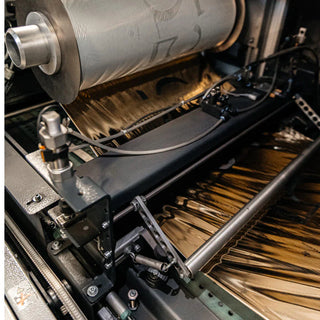
For 380+ gsm cards (or plastic), we turn to silk screen printing, foil, embossing, or debossing.
Most print shops stick to white or light paper. We don't — dark and black design paper, plastic, specialty materials, all possible in our shop.
Design papers come in a huge range of options and prices, usually 50–70% of the total cost. But if you hold one in your hands, you'll understand why.
You might also like


Why Choose Us?

Money-Back Guarantee
If we make a mistake, you get a free reprint or your money back — on us.

30 Years of Experience
Print, marketing, and retail — we've done it all at the highest level. That's a rare experience most print shops don't have.

WIN-WIN-WIN
Our goal is to create long-term cooperation. You win, we win, and the recipient of the printed piece wins.

Full Service
Print, design, marketing — anything connected to it, we're here for you.
"After expressing interest in ordering business cards, I immediately received professional consultation. They showed me various business card samples and explained all the possibilities. Great communication and modern solutions."'- Kersti
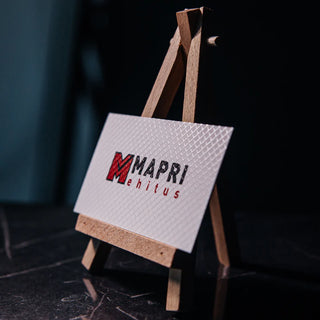
"We are extremely satisfied with our business cards. The entire process from initial concept to final result was very smooth and pleasant. All changes were quickly coordinated, and the quality is excellent."'- Veiko Kivisilla
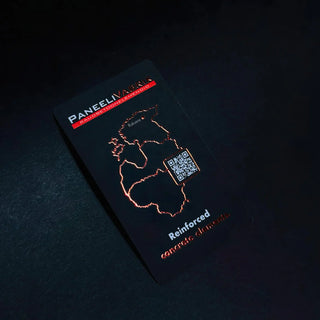
"Thank you for the excellent collaboration! My wishes were well understood, and my vision was perfectly realized with playful touches. I'm extremely satisfied and definitely recommend!"'- Helena s
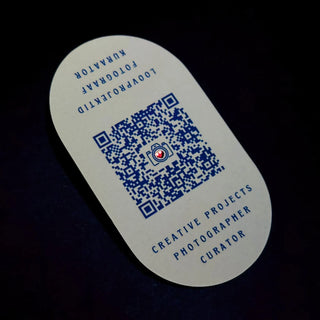
"My Experience with Brandcafe. Was Outstanding! From the Initial Idea to the Final Print, The Process Was Smooth and Hassle-Free. And the Result, Which is Why I Highly Record Brandcafe.'- Julia Astok
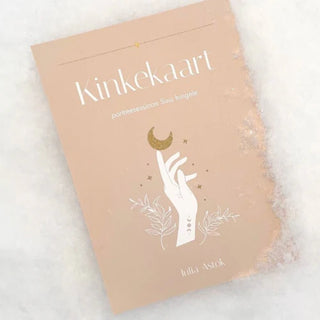
"I'm delighted with how my gift cards turned out! Very fast and excellent approach. There were many different options available, and I got exactly what I wanted in the final product."– Zina
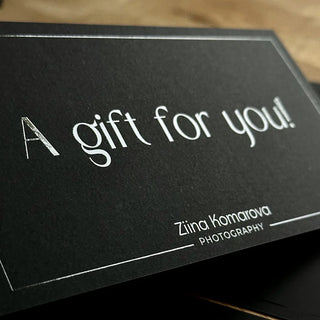
"I'm very satisfied with both the work and design."'- Mare
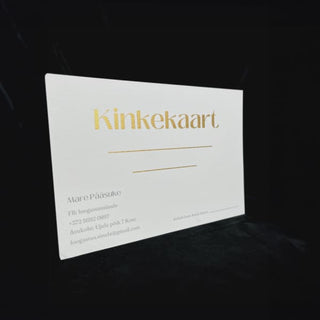
"Got exactly the business cards I was looking for. The price was higher, but worth every penny :)"'- Liis
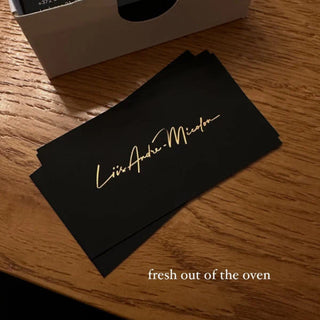
"The entire Brandcafe team service was excellent! The whole process went smoothly from start to finish, with quick and clear communication. I'm very satisfied with the result and recommend Brandcafe's services to others! :)"'- Britain

"Very satisfied with the outcome, the company started using spiral-bound presentation materials."'- Kristina a

"Ordered labels and am very happy with the result. Great and friendly service. Highly recommend to others :)"'- Aleksandra D